
Bankroll Management in Poker: How Much to Keep Behind You
Level 10 · Lesson 3 of 33 min read
Why do you need more behind you than one game costs?
Because the result of one game says almost nothing about how you played it. Cards decide a large share of any single session, and the share only shrinks across hundreds of them. A bankroll is the reserve that keeps you in the game long enough for the shrinking to happen.
Without one, a run of ordinary bad luck ends your poker rather than your session. That is the entire problem this solves, and it is a problem about arithmetic rather than about nerve.
How bad is a normal losing run?
Worse than most beginners expect, and the clearest way to see it is at the top of the range.
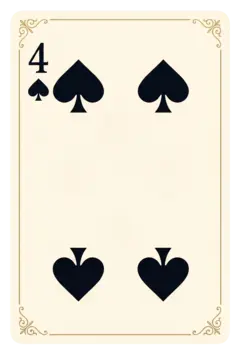
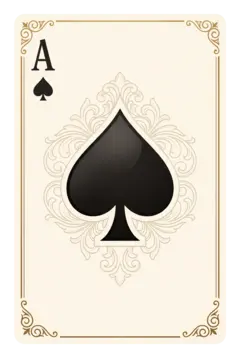

All-in before the flop, pocket aces beat a random hand about 85% of the time — the best number any starting hand gets, and the one how to play pocket aces works through. It still loses roughly one time in seven.
Now stack those up. Get your chips in as a strong favorite four times in an evening and losing one of them is the expected outcome, not a story. Losing two is unremarkable. A player with no reserve reads that evening as evidence about their game, and it is evidence about nothing at all.
How much of a bankroll belongs in one game?
A share small enough that the answer to the last question is boring. The usual advice is stated as a count of buy-ins rather than a chip total, and the exact count varies by format — deeper games and larger fields both need more.
 Pot2,500
The test that survives every version of the advice is this: if losing the stack in front of you would change how you play the next one, it is too large a share. That shows up at the table before it shows up in a spreadsheet — the call you decline because of what it costs rather than what it is worth, the fold you should make and cannot.
Playing scared is the actual cost of a bankroll that is too thin. The chips are not what you lose first.
What does a bankroll not protect you from?
Playing badly, and playing on. A reserve absorbs variance; it does nothing about a leak, and nothing about the decision to keep sitting after the game has stopped going well. Chasing a losing run is where a manageable one becomes something else, and how to win at poker covers the state of mind that drives it.
It also does nothing about choosing games you cannot beat. Sitting with stronger players is a fine way to learn and a poor way to keep chips, and no reserve is large enough to make it work indefinitely.
You'll also run into…
Moving up and moving down. The same rule read in both directions: a bankroll that has grown supports a bigger game, and one that has shrunk asks for a smaller one. Moving down is the harder half and the one that keeps players in the game.
Table selection. Which seat you take is a bankroll decision as much as a strategy one, because it sets how often the run above goes against you.
Any term here that is new to you is defined in the poker terms glossary.
Frequently asked questions
Does bankroll management matter in a play-money game?
The chips do not, and the habit does. Playing a stack you would not risk teaches the same discipline that protects a real one later, and it removes the pressure that makes beginners fold winners and call with hands they know are beaten.
Keep learning
Poker tips collects the table-level habits that make a bankroll last longer than the arithmetic alone would.