
Poker Terms Every Beginner Should Know
Reference16 min read
The table and the hand
How a hand of Texas Hold'em runs, from the deal to the chips being pushed.
The streets
A hand runs over four rounds. Preflop is your two cards alone; the flop turns three community cards, the turn a fourth, the river a fifth. A round of betting follows each one. Full lesson: how to play poker.
Showdown
The showdown is where the players still in turn their cards face up and the best five cards take the pot. It only happens if two or more players are left after the river betting round. Full lesson: how to play poker.
All-in
A player is all-in once their last chip is in the pot. They stay in the hand to showdown, but they can only win the chips they were able to match. Full lesson: Texas Hold'em rules.
Side pot
A side pot holds the chips an all-in player could not match. Only the players who covered that amount can win it, and the all-in player plays for the main pot alone. Full lesson: Texas Hold'em rules.
Muck
To muck is to give up a hand face down — folding, or declining to show at showdown when you know you are beaten. It costs nothing and reveals nothing. Full lesson: Texas Hold'em rules.
Table stakes
Table stakes means only the chips already in front of you play. You cannot add to your stack in the middle of a hand, and nobody can make you play for more than you brought. Full lesson: Texas Hold'em rules.
The betting actions
What you are allowed to do when the action reaches you, and the names for the moves with a twist.
Check, bet, call and raise
Check passes the action on without putting chips in. Bet puts the first chips in on a round; call matches a bet already made; raise increases it. Checking is only legal when nobody has bet yet. Full lesson: poker betting rules.
Open
To open is to make the first raise of the hand before the flop. On a starting hands chart, every square marked playable is a hand to open with rather than call. Full lesson: poker betting rules.
Limping
Limping is calling the big blind before the flop instead of raising it. It keeps the pot small in the one spot where a strong hand wants it large, and it lets extra opponents in cheaply. Full lesson: limping.
3-bet
A 3-bet is the second raise of a preflop round. The big blind is a live bet nobody chose to make, an opening raise is the second bet, and raising over that is the third. Full lesson: what is a 3-bet.
Checking behind
Checking behind is checking when you are last to act, which ends the betting round and the street with it. It costs nothing and collects nothing, so a hand that can be paid off should bet instead. Full lesson: poker bet sizing.
Position and the seats
Who acts when — and why the same two cards are worth different amounts from different chairs.
Position
Position is where you sit in the order of action, not where you sit at the table. Acting after an opponent means deciding with information they did not have. Full lesson: poker positions.
The button
The button is the seat that acts last on the flop, turn and river, which makes it the most valuable seat in the game. The marker moves one seat left after every hand. Full lesson: poker positions.
The blinds
The small blind and big blind are forced bets posted before any cards are dealt, so that every hand has something in the middle worth playing for. The big blind is twice the small blind. Full lesson: small blind vs big blind.
Seat names
At a full table the seats are named: under the gun acts first before the flop, the cutoff sits one seat before the button and the hijack one before that. Vibe Poker deals three-handed, so only the button and the two blinds exist. Full lesson: poker positions.
Out of position
You are out of position on an opponent who acts after you: you commit chips first and they answer knowing what you did. It names a pairing, not a seat — after the flop both blinds are out of position on the button, before it they are not. Full lesson: out of position.
Hands and rankings
The vocabulary of a showdown — what you hold, and who collects.
Hand rankings
Hand rankings are the fixed order of the ten five-card hands, royal flush down to high card. Hold K♦ K♣ on K♠ 7♥ 7♦ 2♣ 9♠ and you have a full house, fourth from the top. The middle of the chart trips beginners: does a flush beat a straight. Full lesson: poker hand rankings.
Best five cards rule
Your hand is always the best five cards out of the seven you can see: two in your hand, five on the board. Both of your cards can play, or one of them, or neither. Full lesson: best five cards rule.
Playing the board
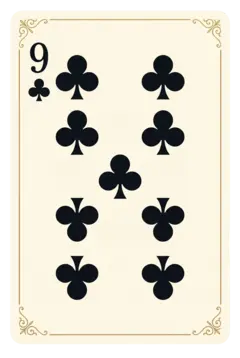
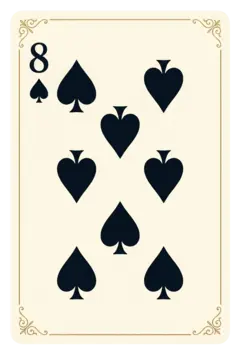
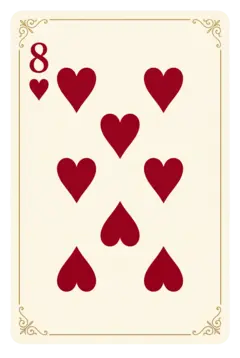
Playing the board is when the five community cards are your whole hand and neither hole card improves them. You hold 2♠ 2♣, the board runs 5♥ 6♦ 7♠ 8♣ 9♥, and that straight is your hand. Full lesson: playing the board.
The wheel
The wheel is the A-2-3-4-5 straight, the lowest one in poker, with the ace playing low, not high. Hold A♣ K♦ on 2♦ 3♠ 4♥ 5♣ 9♠ and you have a straight that doesn't look like one. Full lesson: the wheel.
Kicker
A kicker is the side card that decides the pot when two players hold the same hand type. You hold K♠ 10♠, they hold Q♦ 10♦, the board brings a 10: both have a pair of tens, and your king kicker takes it. Full lesson: kicker.
Top pair
Top pair is a pair made with the highest card on the board — J♣ 8♥ on J♦ 7♠ 3♣. The card beside it decides most of these pots, which is why top pair with a weak kicker is the shape that costs beginners most. Full lesson: kicker.
Split pot
A split pot is a pot divided evenly when two or more players end up with the same five-card hand. Suits never break a tie in Texas Hold'em: two flushes of the same ranks are equal. Full lesson: split pot.
Trips and sets
A set is your pocket pair plus a matching board card — 6♥ 6♦ with a 6♣ out there. Trips is a board pair plus one card from your hand. Both are three of a kind, ranked the same. Pair the board and it becomes a full house. Full lesson: trips and sets.
Draws
Unfinished hands. A handful of shapes cover nearly all of them.
Draw
A draw is a hand that isn't finished yet — four cards toward something strong, waiting on one more. Hold A♥ 7♥ on K♥ 9♥ 4♣: any heart makes an ace-high flush. Until it arrives you hold no made hand at all. Full lesson: poker draws.
Flush draw
A flush draw is four cards of one suit between your hand and the board, with at least one card still to come. A♥ 7♥ on K♥ 9♥ 4♣ is the classic shape — the most common draw you will meet. Full lesson: flush draw.
Straight draw
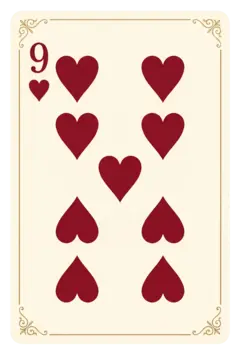
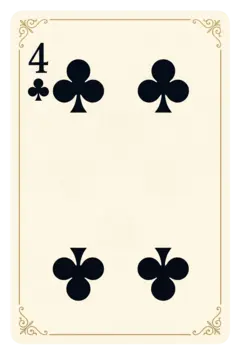
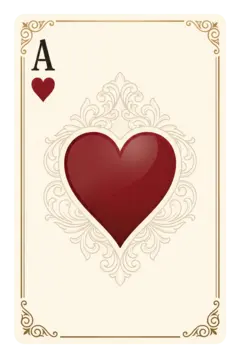
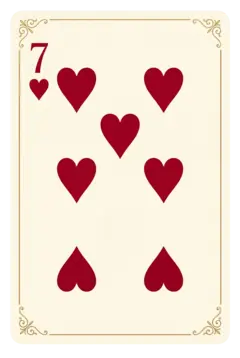
A straight draw is four ranks in a sequence shape, one card short of a straight. Hold 8♥ 9♣ on 10♥ J♣ 2♦ and your 8-9-10-J is four in a row. Two shapes exist, worth very different amounts. Full lessons: open-ended straight draw and gutshot straight draw.
Open-ended straight draw
Open-ended means the four in a row are open at both ends, so a card at either end completes the straight. With 8-9-10-J, either end works — eight outs, about 32% by the river. It is the strongest straight shape. Full lesson: open-ended straight draw.
Gutshot straight draw
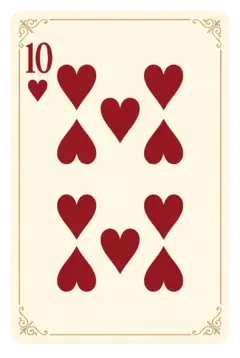
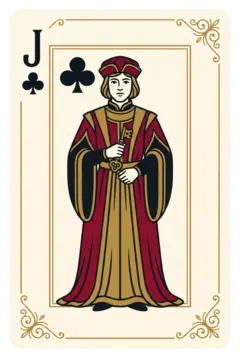
A gutshot is a straight draw missing one card in the middle. Hold 8♣ 9♦ on J♥ Q♠ 2♣ and only a 10 fills the gap — four outs, about 17% by the river. Also called an inside straight draw. Full lesson: gutshot straight draw.
Combo draw
A combo draw is a flush draw and a straight draw in the same hand. Hold 8♥ 9♥ on 10♥ J♥ 2♣: any heart makes a flush, a 7 or a queen makes a straight — fifteen outs once you stop double-counting, about 54% by the river. Full lesson: combo draw.
Backdoor draw
A backdoor draw is three cards toward a flush or a straight on the flop — you need both the turn and the river. A bonus on a real hand, never a reason to continue alone. Full lesson: backdoor draws.
Outs and odds
Counting, converting, and the one shape that barely counts at all.
Out
An out is any unseen card that turns your unfinished hand into a winning one. With A♥ 7♥ on K♥ 9♥ 4♣, the 2♥ is an out and the 2♠ is not. Nine hearts are unseen, so you hold nine outs. Counting them is a routine: poker outs and odds. Full lesson: out.
Rule of 2 and 4
The rule of 2 and 4 turns outs into a percentage: multiply by 2 with one card to come, by 4 with two. Nine outs on the flop, two cards coming:
9 outs × ~4% ≈ 36%
Call it ~35%. Full lesson: rule of 2 and 4.
Equity
Equity is your hand's chance to win the pot, written as a percentage. The out counts above are how you get there: count, convert, and recount on every street, because the number falls as cards land. Full lesson: poker equity.
Set mining
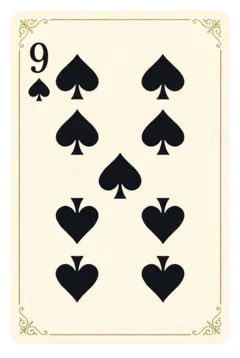
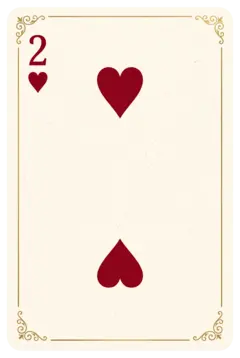
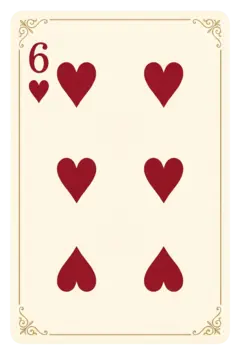
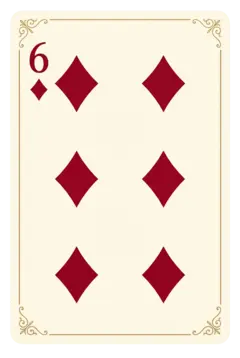
Set mining is calling before the flop with a small pocket pair, hoping to flop three of a kind. Hold 6♥ 6♦ on K♣ 9♠ 2♥ and only the other two sixes help — the pot it wins on the rare hit is what pays for the misses. Full lesson: set mining.
Price
The second number in every decision comes from the pot, not your cards.
Pot odds
Pot odds are the price a call offers — the share of the final pot your call puts in. Call 1,500 into a pot of 6,000:
1,500 ÷ (6,000 + 1,500 + 1,500) = 1,500 ÷ 9,000 ≈ 17%
You need to win about 17% of the time to break even. Full lesson: pot odds.
Price
Price is the everyday name for pot odds — the number your equity has to beat. The same flush draw is a comfortable call against a quarter-pot bet and a fold against a large one. That comparison runs every draw you play. Full lesson: pot odds.
Equity vs pot odds
Comparing the two numbers is the decision itself: equity above the price and calling makes money over time, price above equity and folding does. Full lesson: equity vs pot odds.
Implied odds
Implied odds are the chips you expect to win after your draw lands, on top of what is in the pot right now. They can justify a call the current price alone does not. Full lesson: implied odds.
Reverse implied odds
Reverse implied odds are the mirror image: the chips you expect to lose after your draw lands, because the card that finished your hand handed someone else a better one. A low flush is the usual case. Full lesson: implied odds.
Expected value
Expected value, written +EV or −EV, is what a decision is worth on average across every time you will face the same spot. The hand in front of you tells you nothing about that average. Full lesson: expected value.
Fold
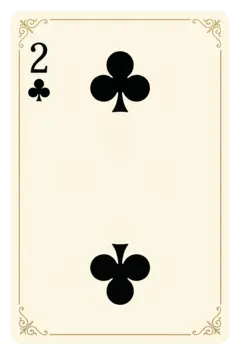
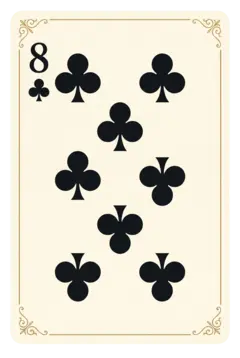
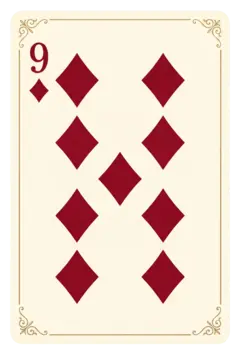
To fold is to give up your hand and the chips you have already put in. You pay nothing more and see no more cards. You keep the chips still in front of you — like the gutshot below. Full lesson: when to fold.
 Pot4,000
 Bet4,000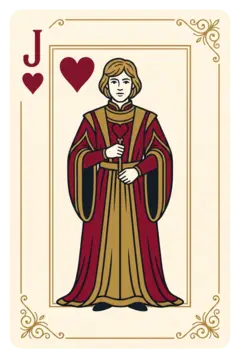
Starting hands
What you are dealt, how it gets written down, and when the cards stop being the question.
Premium hand
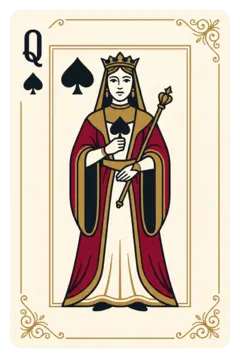
A premium hand is a starting hand strong enough to raise from any seat: pocket aces, kings, queens or jacks, and ace-king. Q♠ Q♥ is one. Full lesson: best starting hands.
Pocket pair
A pocket pair is two cards of the same rank in your hand — 6♥ 6♦. Unlike every other starting hand it is already a made hand before the flop, which is what makes even the small ones worth playing. Full lesson: best starting hands.
Suited and offsuit
Suited means your two cards share a suit, so a flush is still possible; offsuit means they do not. On a chart a suited hand carries an s and an offsuit one an o, as in AKs and AKo. Full lesson: starting hands chart.
Suited connectors
Suited connectors are two cards of one suit in consecutive ranks — 7♠ 6♠. They make nothing by themselves and reach both straights and flushes, which is why they play better in cheap pots than in large ones. Full lesson: combo draw.
Deal probabilities
Deal probabilities are how often a hand arrives in your two hole cards. Completion probabilities are how often you finish with a hand after five community cards. A pocket pair is dealt one time in 17; three of a kind is a finish, never a deal. Full lesson: poker hand probabilities.
Range
A range is the group of hands a player could be holding in a spot, rather than one specific hand. You have a range too: the hands you decided to play from that seat. Full lesson: starting hands chart.
Starting hands chart
A starting hands chart, or preflop chart, is a 13×13 grid of all 169 starting hands, each square marked raise, call or fold for one seat. A range chart shades the same grid to show what an opponent could hold instead. Full lesson: poker starting hands chart.
Short stack
A short stack is roughly ten big blinds or fewer. Count your stack in big blinds rather than chips: the blinds rise on a clock, so the same chip count gets shorter without you losing anything. Full lesson: short stack poker.
Push/fold
Push/fold is what a short stack's preflop options collapse to — all-in or fold, with no size in between that leaves chips worth playing. At that depth it covers almost every hand you can be dealt. Full lesson: short stack poker.
Betting and bluffing
Why a bet gets made, how big it is, and what the player facing it is being asked.
Value bet
A value bet is a bet made when you are probably ahead and a worse hand can still call. The size to choose is the one those worse hands will pay, not the largest one available. Full lesson: poker bet sizing.
Wet and dry boards
A wet board carries live flush and straight cards — 9♥ 8♥ 6♣. A dry one offers almost nothing to draw at — A♥ 7♣ 2♠. The more a board can improve someone else's hand, the higher your price should be. Full lesson: poker bet sizing.
Continuation bet
A continuation bet, or c-bet, is a bet on the flop by the player who raised before it. It continues the story the preflop raise told, whether or not the flop actually helped. Full lesson: continuation bet.
Check-raise
A check-raise is checking first and then raising the bet your check invited. It wins more chips than betting out when the player behind you bets often, and it makes draws pay from the seat that has to act first. Full lesson: check-raise.
Slow playing
Slow playing is checking or calling a strong hand to keep opponents in. Three things have to be true at once for it to pay: nothing can outdraw you, a bet would collect nothing extra, and the opponent bets when you don't. Full lesson: slow playing.
The nuts
The nuts is the best hand possible on a given board — no two cards an opponent can hold will beat it. Which hand that is comes from the board rather than from your cards, so read the board again every time a card lands. Full lesson: the nuts.
Bluff
A bluff is a bet made with a hand that cannot win at showdown, so folds are the only way it profits. A semi-bluff is the same bet with a draw behind it, which can win by improving as well. Full lesson: how to bluff.
Fold equity
Fold equity is what a bet is worth purely because opponents sometimes fold to it, before a single card is counted. It is why moving all-in with a draw wins two ways and calling with the same draw wins one. Full lesson: fold equity.
Bluff-catcher
A bluff-catcher is a hand that beats a bluff and loses to a value bet — usually a middling pair you should not count on improving. Calling with one is a read on the opponent rather than on your own cards. Full lesson: poker tells.
Tell
A tell is anything an opponent does that narrows what they can be holding. Online the reliable ones are the bets themselves: which streets they fire, what sizes they pick, what they show down. Full lesson: poker tells.
Protection
Betting for protection means the hands still drawing against you have to pay while cards are left to come. A free card is the cheapest way for an opponent to beat a hand that is ahead right now. Full lesson: check-raise.
Tilt
Tilt is letting the hand that just happened decide how you play the next one. It shows up as raising hands you would have folded an hour earlier, and as bet sizes that keep climbing. Full lesson: how to win at poker.
Practice this in Vibe Poker
Put these terms on real hands — 20 Primer levels in Vibe Poker, about two minutes each. Free, play-money.
Free, play-money only. 18+.