
Combo Draws: Drawing at Two Hands at Once
Level 3 · Lesson 5 of 54 min read
What does a combo draw look like?
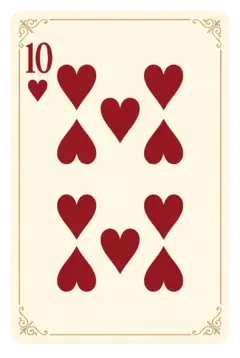

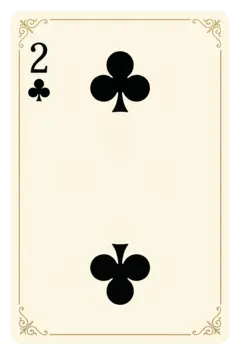
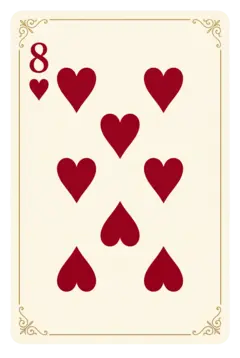
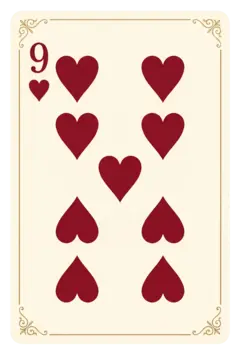
Read those four cards by suit and you have a flush draw: four hearts, one short. Read the same four by rank and you have an open-ended straight draw: 8-9-10-J, open at both ends. Neither half is unusual on its own — both are ordinary poker draws. Holding both at once is what changes the hand.
The shape comes from suited connectors, two cards of one suit next to each other in rank. They rarely flop this much; when they do, they connect twice.
How do you count a combo draw's outs?
Carefully, because the two lists overlap.
Start with the flush. Thirteen hearts exist and you can see four, so 9 remain — nine outs.
Now the straight. Your 8-9-10-J completes with a 7 at the bottom or a queen at the top. Four 7s and four queens exist, which looks like eight more. It isn't: the 7♥ and the Q♥ are hearts, already counted.
9 hearts = 9 outs
3 non-heart 7s = 3 outs
3 non-heart queens = 3 outs
9 + 3 + 3 = 15 outs
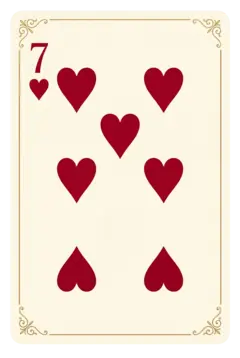
The rule underneath: an out is a card, not a way to win. Counting the 7♥ twice would not add a card to the deck.
Quick check
You hold 8♥ 9♥ on 10♥ J♥ 2♣ — fifteen outs, two cards to come. How often does a flush or a straight arrive by the river?
Why the usual shortcut breaks here
Outs × ~4% for two cards to come gets rough at this height:
15 outs × ~4% ≈ 60% — the shortcut overshoots at high out counts
Real number: ~54% by the river
Past ten outs, recall the number instead of multiplying for it. Why the doubling drifts belongs to the rule of 2 and 4.
Why is a combo draw the strongest draw to have?
| Draw | Outs | By the river |
|---|---|---|
| Gutshot | 4 | ~17% |
| Open-ended straight draw | 8 | ~32% |
| Flush draw | 9 | ~35% |
| Combo draw | 15 | ~54% |
A combo draw is not a slightly better flush draw. It is the only draw in that table that gets there more often than not.
There is a second reason. You are drawing at two different hands rather than two copies of one, so a miss on the flush side can still land on the straight side, and when both arrive you take the flush, which outranks the straight.
A combo draw holds up against prices that would fold a lesser draw — compare it against the pot odds you are offered. It still misses nearly half the time.
You'll also run into weaker two-way draws
Not every hand that draws twice carries fifteen outs. A flush draw next to a gutshot straight draw draws at two hands too, but the straight half adds fewer new cards.

Count each draw, remove the shared cards, and use what is left.
Frequently asked questions
Should you always raise with a combo draw?
Raising is often better than calling, for a reason the outs do not show: opponents fold immediately some of the time, and that is a pot won without seeing another card. Vocabulary that is new here is defined in poker terms for beginners.
Practice this in Vibe Poker
Level 16 in the app practices exactly this — it takes about two minutes.
Free, play-money only. 18+.