
The Rule of 2 and 4: Turn Outs Into Percentages Fast
Level 4 · Lesson 3 of 84 min read
How does it work on a real hand?
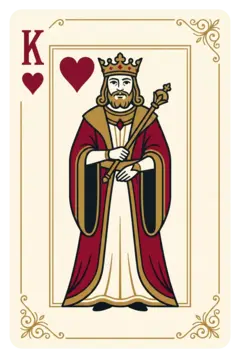
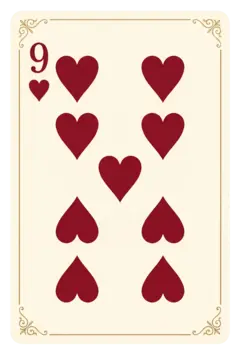

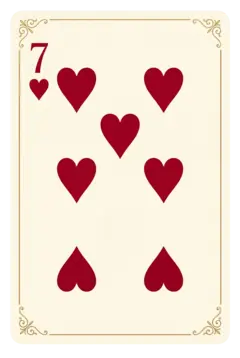
Count first, multiply second. Thirteen hearts exist and you can see four — two in your hand, two on the board:
13 hearts − 4 you can see = 9 outs
The turn and the river are both still to come, so this is the ×4 half:
9 outs × ~4% ≈ 36%
Counting the outs is the harder half; poker outs and odds slows it down, and a single out has its own page.
Why does the rule work?
Because one out is worth about 2% per card to come. Everything after that is addition.
On the flop you can see five cards, leaving a little under fifty you cannot, so any one of them is roughly a 2% chance to be dealt next. The river then brings its own chance, which is why two per out becomes four per out.
The Vibe Poker levels teach this from the out's side — what one card is worth — while most poker sites teach it from the multiplier's side and give it this name.
When do you use 2 and when do you use 4?
Use ×4 on the flop, when you expect to see both the turn and the river. Use ×2 on the turn, when only the river is left.
9 outs × ~2% ≈ 18%
Half the flop figure from an identical hand — one of your two chances expired.
The ×4 side assumes you get to see both cards, and a bet on the turn can take the second one away.
Quick check
You flop a gutshot — four outs, with the turn and the river both still to come. What does the rule give you?
Where does the rule break down?
At high out counts, and in the flattering direction.
The doubling step is the culprit. It counts some winning cards twice, because a card that saves you on the turn cannot also save you on the river. At four or eight or nine outs that overlap is tiny. At fifteen it is not.
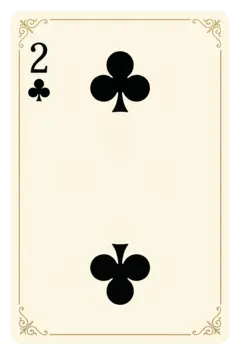
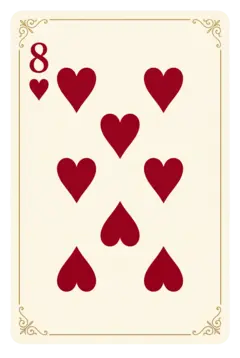
15 outs × ~4% ≈ 60% — but the real figure is ~54%
Six points is enough to matter. That hand is a combo draw, and it is the one shape where the shortcut should be set aside: past ten outs, recall the number rather than multiply for it.
The five numbers worth memorizing
Most flops you see are one of these five shapes. "By the river" means from the flop, two cards still to come.
| Outs | Draw | By the river |
|---|---|---|
| 2 | Pocket pair to a set | ~8% |
| 4 | Gutshot straight draw | ~17% |
| 8 | Open-ended straight draw | ~32% |
| 9 | Flush draw | ~35% |
| 15 | Combo draw | ~54% |
Four rows sit within a point of what the rule produces; the last is the corrected figure. Any draw name you do not recognize is defined in poker terms for beginners.
Frequently asked questions
Is it the rule of 2 and 4, or the rule of 4 and 2?
Both names describe the same shortcut. "2 and 4" lists the multipliers in numerical order; "4 and 2" lists them in the order you use them, since the flop comes before the turn. The math is identical, so use whichever you hear at your table.
Does the rule tell you whether to call?
No, and this is the common misread. It tells you how often your hand arrives, nothing more. A flush draw is an easy call at one price and a clear fold at another, so it becomes a decision only against the pot odds you are offered.
Practice this in Vibe Poker
Levels 13, 14, 15, 16, and 17 in the app practice exactly this — each takes about two minutes.
Free, play-money only. 18+.