
Poker Equity Explained for Beginners
Level 4 · Lesson 5 of 83 min read
Where does the equity number come from?
For an unfinished hand, it starts with counting. Your outs — the cards that turn your hand into the winning one — convert straight into a percentage.
Take a flush draw:

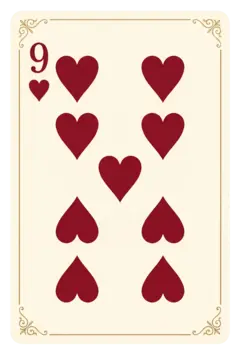
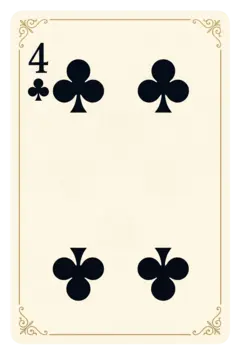

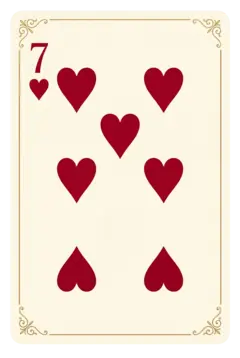
Thirteen hearts exist and you can see four, so nine remain. Each out is worth roughly 2% per card still to come, and from the flop two are coming:
9 outs × ~4% ≈ 36%
Round to ~35%. The counting system behind it lives in poker outs and odds; the multiplier shortcut is the rule of 2 and 4.
Every common draw carries a number the same way — poker draws lists them.
Recount on every street. A card that misses you shortens the time you have left, so the same hand is worth less on the turn than it was on the flop.
What is equity worth in chips?
Equity is a claim on what is already in the middle — your hand's long-run share of the pot.
 Pot10,000
35% of 10,000 = 3,500
You will never collect exactly that in this hand: you win the whole 10,000 or you win nothing. Play the same spot a hundred times and the chips settle around the average.
Quick check
Your hand has ~35% equity in a pot of 10,000, which comes to 3,500 chips. What does that 3,500 mean?
What do you do with your equity?
Pot6,000 Bet1,500
Move that bet up and the same hand becomes a fold; only the price changed. Pot odds covers working out that price, and equity vs pot odds sets the two numbers side by side.
Do made hands have equity too?
Yes. It belongs to every hand in the pot, not just the ones still drawing, and the shares always add up to the whole pot. A pair that is ahead right now still leaves a slice for whoever is drawing at it — which is why a made hand gets outdrawn with nobody having played badly.
Does equity change with more players in the pot?
Pot10,000

Every extra player who calls is another claim on the same pot. Your outs do not change; the share of the pot they represent does. Count the hands you are up against before you trust a percentage. Any unfamiliar term here is defined in the poker terms for beginners hub.
Frequently asked questions
Why does an equity calculator show a different number than the rule of 2 and 4?
Because the shortcut is deliberately approximate. A calculator deals out every remaining combination and reports the exact figure; multiplying outs by 4 slightly overstates two-card draws, and by a little more as the out count rises. The gap is small at the out counts you meet most often and widens with the biggest draws — still far smaller than the errors you would make by not counting at all.
Practice this in Vibe Poker
Levels 13 and 18 in the app practice exactly this — each takes about two minutes.
Free, play-money only. 18+.