
Texas Hold'em Rules: The Full Reference
Level 1 · Lesson 2 of 86 min read
How are the cards dealt?
One standard 52-card deck, no jokers. Every player receives two cards face down. Five more are dealt face up in the middle over three separate stages, and they belong to every player at once.
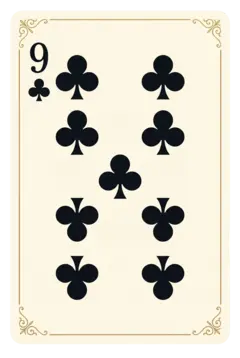
The five arrive three, then one, then one: the flop, the turn, the river. At a live table the dealer burns one card face down before each of those three stages, which is a precaution against marked cards and never affects play.
Nothing is ever replaced or discarded. The two cards you are dealt are the two you finish with.
What are the four rounds called?
| Round | Cards showing | Who acts first |
|---|---|---|
| Preflop | none | the player left of the big blind |
| Flop | three | the first active player left of the button |
| Turn | four | the first active player left of the button |
| River | five | the first active player left of the button |
Action moves clockwise and a round ends when every remaining player has either matched the largest amount put in, or folded. On your turn you may fold, check, call, bet or raise — poker betting rules sets out which of those are legal when, and the minimum a raise has to be.
The order changes once, between preflop and the flop — poker positions covers what that flip is worth.
Who posts the blinds, and when does that move?
The button marks the nominal dealer. The player to its left posts the small blind, the next player the big blind, and those two amounts are in the pot before any cards are dealt.
The button moves one seat clockwise after every hand. Small blind vs big blind covers what each one costs you and why the big blind gets a discount to continue.
Two-handed play inverts part of this: the button posts the small blind, acts first before the flop, and acts last on every round after it. Three-handed — the format Vibe Poker deals — has no seats other than the button and the two blinds, so every hand is played from one of the three.
What happens when a player is all-in?
A player who puts in their last chip is all-in. They stay in the hand to showdown, but they can only win the chips they were able to match.
 Pot24,000

Anything beyond that amount goes into a side pot that only the players who covered it can win. Say you are all-in for 8,000 and two opponents each put in 20,000:
main pot = 8,000 × 3 = 24,000 — the only pot you can win
side pot = 12,000 × 2 = 24,000 — settled between the two of them
You can hold the best hand, win the showdown, and still watch a second pot go elsewhere.
Nobody can be forced out of a hand for lacking chips, and nobody can win more from an opponent than that opponent had. No-limit means you can bet everything in front of you, never more.
Only the chips already on the table play. That is table stakes: you cannot add to your stack in the middle of a hand, however badly you want to.
Who shows their cards first?
The last player to bet or raise on the river shows first. If the river was checked around, the first active player left of the button shows first, and the rest follow clockwise.
A player who is beaten may muck — fold face down without showing — and give up the pot rather than reveal what they had. It costs nothing and reveals nothing, so most players do it.
When is a hand dead?
Three situations end a player's hand regardless of what they hold.
- Cards released face down. Once you push your cards into the discards, the hand is over even if you meant to call. The pot cannot be reclaimed on the grounds that you changed your mind.
- An exposed card during the deal. A hole card flashed while dealing is a misdeal. Before the deal completes, the remedy is a fresh shuffle; after it completes, the affected player gets a replacement card.
- Acting on a hand you no longer have. Protect your cards. A hand swept into the discards by the dealer is dead, and "I still had it" is not a defense anyone can verify.
None of these apply when you play online, where the software handles the deal and nothing can be mucked by accident. They are worth knowing before you sit at a live table, because every one of them costs a pot the first time.
What happens when two hands are the same?
The pot is split. Suits have no ranking in Hold'em, so there is no tiebreaker beyond the five cards themselves.
Two rules decide almost every close showdown:
- The fifth card counts. A pair of aces with a king beats a pair of aces with a queen — that fifth card is the kicker.
- You are not required to use your own cards. If the five in the middle are better than anything you can assemble, everyone remaining shows down that same board and splits — see playing the board.
Which five make your hand is never your choice: it is always the best five available, per the best-five rule, and the hand rankings put those five in order. The poker terms glossary carries a one-line entry for every rule term named above.
If you would rather see the rules happen than look them up, how to play poker walks through a single hand from the blinds to the reveal.
Frequently asked questions
Does an ace count as high or low?
Both, and it is the only card that does. It plays high in A-K-Q-J-10 and low in A-2-3-4-5, which is the lowest straight in the game — see the wheel. An ace cannot wrap around the middle, so Q-K-A-2-3 is not a straight.
Practice this in Vibe Poker
Short three-player matches, free play-money chips — the same concepts, at a real table.
Free, play-money only. 18+.